China’s new ethnic unity law, and what does it mean for minorities?
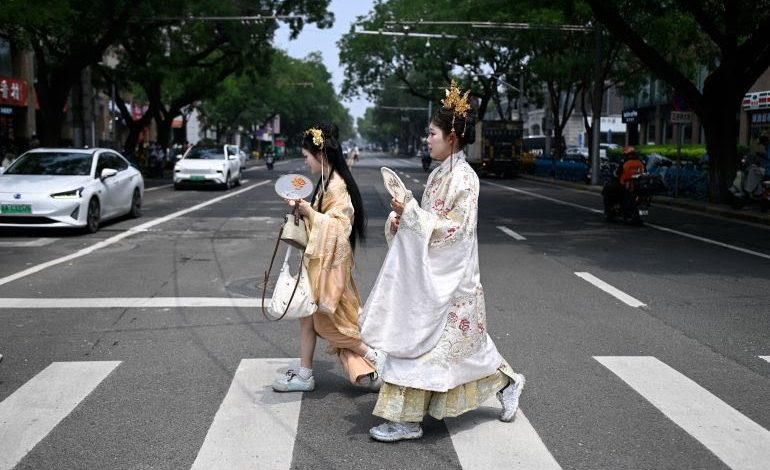
New Delhi (Vivek Ojha) : China has brought into effect a new ethnic unity law that rights groups and foreign officials have warned could accelerate the forced assimilation of ethnic minorities. The world’s second most populous nation officially recognises 55 ethnic minority groups, which together account for 8.9 percent of mainland China’s population.
Beijing also announced that the new law, which entered into force on Wednesday, could apply to individuals outside the country’s borders, which has raised further alarm among rights groups, which said it could be used to target overseas critics of China.
The Chinese government, however, said Western media outlets “misinterpreted” the overseas povision and the country wants merely to exercise its right to combat separatist movements abroad.
What is China’s ethnic unity law?
China passed the law on March 12 to create a “shared” national identity among the country’s 56 ethnic groups – the Han majority and 55 minority groups.The largest communities among China’s ethnic minorities include the Uighurs, about 11 million people, and Tibetans, about 7 million people.
Tibet and Xinjiang, where most Uighurs live, are China’s only two provinces where communities that nationally are ethnic minorities form the majority of the population.
The law, approved by China’s ceremonial legislature, is designed to foster “a stronger sense of community among all ethnic groups in the Chinese nation”, Lou Qinjian, a delegate to the National People’s Congress who introduced the proposal before the body, said in March.
The law lays out the need to promote ethnic unity by all government bodies and private enterprises, including local governments and state-affiliated groups like the All-China Women’s Federation.
But critics of the Chinese government argued that Beijing has previously used similarly anodyne-sounding rules and laws to justify limiting expressions of ethnic diversity, especially among Tibetans and the Uighurs.“The people of each ethnic group, all organisations and groups of the country, armed forces, every Party and social organisation, every company, must forge a common consciousness of the Chinese nation according to law and the constitution, and take the responsibility of building this consciousness,” the law reads.
According to Article 15 of the new law, Mandarin Chinese is mandated to be taught to all children before kindergarten and throughout the rest of compulsory education up to the end of high school.
Mandarin is already the primary language of instruction in Inner Mongolia, Tibet and Xinjiang, all Chinese regions with large ethnic minority populations, but the new law essentially states that minority languages cannot be the primary language of instruction nationwide.
Until recent years, ethnic minorities had some autonomy in what language could be used for teaching in schools.The Chinese Constitution states that “each ethnicity has the right to use and develop their own language” and “the right to self-rule” while the Law on Regional Ethnic Autonomy promises limited autonomy to those groups, including allowing them to create flexible measures to develop their economies.