Hindi Journalism Day 2026: Date, history, and significance
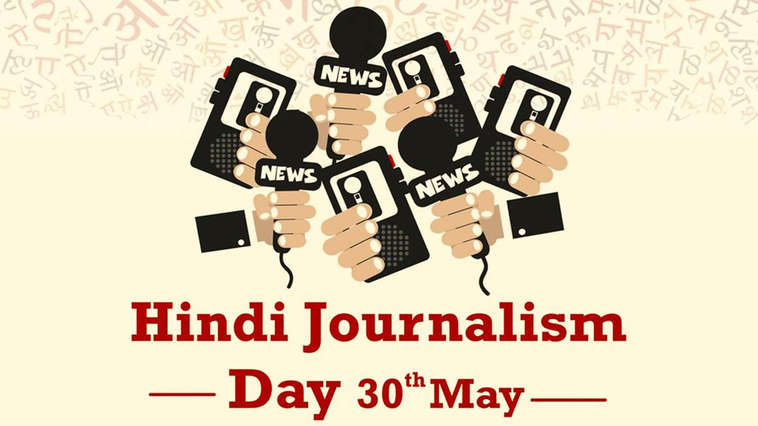
New Delhi ( Raghwendra Pratap Singh) : Hindi Journalism Day, observed annually on May 30, commemorates the rich legacy of journalism in the Hindi language. This day honours the pioneers, those brave voices that resound in the public eye, and what Hindi journalism is doing for society.
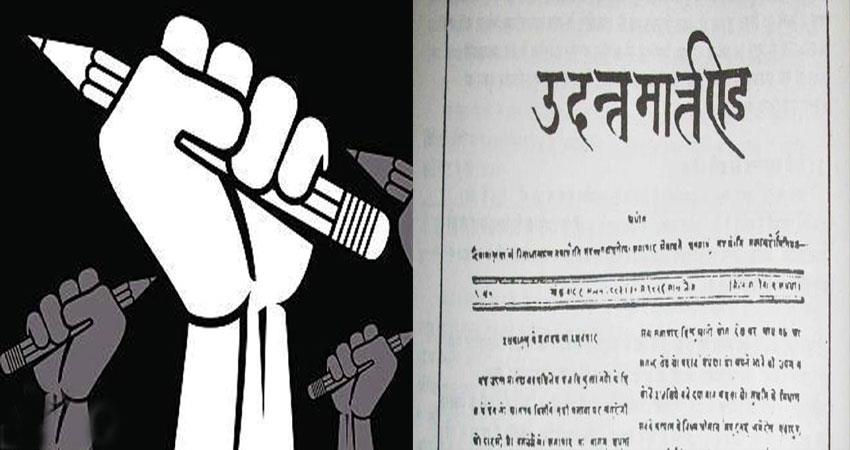
The origins of Hindi journalism trace back to 1826, when Pandit Jugal Kishor Shukla published the first Hindi newspaper, Udant Martand, in Kolkata. This weekly newspaper marked a revolutionary step, catering to the growing need for news among Hindi-speaking communities. The first issue of Udant Martand printed 500 copies, thus being a milestone in the annals of Hindi journalism.
Udant Martand, which means “News Sun,” played a crucial role in raising awareness about social issues. Also, it contributed to India’s freedom struggle and promoted the Hindi language and culture. Over the period of time, Hindi journalism evolved, adapting to changing technologies and societal needs.
Celebrating this day marks a reiteration of our dedication to upholding the standards of quality journalism in Hindi, fighting for accuracy and ethics in reporting through diversified mediums. Hindi journalism amplifies the voice of the oppressed and leads to positive change in society. Its priceless contribution deserves appreciation and celebration.
This day is a reminder of the responsibility that journalists carry the duty to uphold truth, integrity, and the spirit of democracy. It’s an occasion to honour the courage of reporters who risk their lives to bring the news to the forefront, often in the face of adversity.
History of Hindi journalism in stages: The ‘Bangdoot’ weekly was brought out from Kolkata itself on 10 May 1829. Published in collaboration with Raja Ram Mohan Roy and under the editorship of Nilratna Haldhar, this paper was originally in Bangla, which was also printed in Hindi as required.
The life journey of ‘Bangdoot’ ended on July 30, 1829, after the release of only twelve issues. The weekly “Banaras Akhbar” was the first newspaper to come out of the Hindi region. In 1845, the paper came out from Kashi under the editorship of Shri Govind Raghunath Tathate. In 1846, “Indian Sun” was published from Kolkata in five languages like “Bengal Herald” and “Bangdoot”. It had ten pages and each page had five columns. Its Hindi version name was “Martand”.
Sudhavarshan” was the first Hindi daily, which came out in the year 1854 from Bada Bazar in Kolkata. Originally it was a bilingual paper, with the first two pages in Hindi and the remaining two pages in Bengali. Its editor was Shyam Sundar Sen. The “Pyame Azadi” was taken out from Delhi in 1857 by Shri Ajimullah Khan, the leader of the freedom movement. Earlier it used to come out in Urdu, but soon it started coming in Hindi also. The idea was to bring out its version from Jhansi as well. The first famous Indian national anthem of 1857 was published in this paper, the opening lines of which were-
Ham Hain Esake Malik Hindustan Hamara Baat Vatan Hai Kaum Ka Jannat Se Bhi Pyara
Mirza Bedar Bakht, the editor of “Pyame Azadi”, was hanged by the British rulers. Simultaneously, an injunction was issued by Mr. Henry Cotton that whoever found the copies of “Pyame Azadi” would be liable to the death penalty. This is probably the first incident in the history of newspapers when the entire family of the readers of a newspaper has been sentenced.
In 1859, “Dharmaprakash” from Ahmedabad and in 1863 “Mrit Lokhit” from Ara by missionaries was published. The publication of “Marwad Gazette” started in 1866. In 1867, a bilingual paper “Vidya Vilas” in Hindi and Urdu came out from Jammu and Kashmir. The period of 1826-67 is the period of emergence and development of Hindi journalism in India. The newspapers and magazines, that came out during this period, worked to make way for Indian journalism. Later, with the debut of Bharatendu Harishchandra in the world of journalism, journalism got a new dimension, a new form and a new direction and in the true sense, the foundation of a new era was laid.
Bharatendu Era:-
The development journey of the era of Hindi journalism had started with “Udant Martand”, which continued through daily, weekly and monthly medium till the Bharatendu era. The Bhartendu era (1867-1885) is considered to be the second era in the history of Hindi journalism, starting from the year 1867. In the same year Bharatendu Harishchandra started the publication of a monthly magazine named “Kavi Vachan Sudha”. This magazine was considered by the French writer Tasi as a ‘Distinguished Newspaper’.
Bharatendu Harishchandra, the pioneer of Hindi journalism, was born on 9th September 1850 and went to heaven on 6 January 1885 at the age of 35. He took up literary creation as a mission and started monthly “Kavi Vachan Sudha” from Kashi in 1867. After publishing some issues, it was made fortnightly. In 1873 itself, Bharatenduji started publishing the monthly magazine “Harishchandra Magazine” and worked to popularise modern Hindi. Vyasji considered him an immortal gift of Hindi journalism. In 1874, this magazine became “Harishchandra Chandrika” and was published for eight years. This was the third magazine to come out of Kashi. In 1884, he started the publication of his new “Harishchandra Chandrika” and continued it till the last moment of his life. He also brought out a Vaishnavism-oriented magazine called “Bhagvat Toshini”, which lasted for a year.