
Capital punishment only if life term option ruled out: Supreme Court
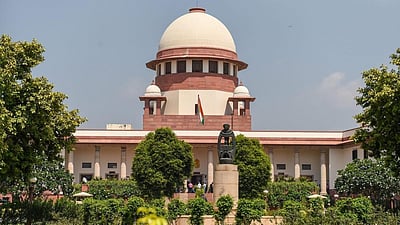
Dehradun ( The Indian View team) : The Supreme Court has ruled that the death penalty can be imposed only when the alternative of life imprisonment is “unquestionably foreclosed”, stressing the need for a careful balancing of aggravating and mitigating factors with equal focus on the crime, the criminal’s background and reformative potential.
A bench of Justices Vikram Nath, Sandeep Mehta and Vijay Bishnoi made the observation while commuting the death sentence of a man convicted of the double murder of his former employer and a supervisor in Uttarakhand. The court noted that in cases falling short of the “rarest of rare” category, where ordinary life imprisonment subject to remission may appear inadequate, courts can impose a fixed-term life sentence without remission to ensure punishment proportionate to the crime.
The bench was hearing an appeal by Shahjad Ali alias Ali Ur Rehman against the Uttarakhand High Court’s 2018 judgment upholding his death sentence for the murders of motorcycle showroom owner Sanjay Kumar Guleria and supervisor Lalitha at Selakui on February 10, 2011. Ali, a head mechanic, who was sacked following a complaint by Lalitha, had repeatedly sought re-employment but was turned down by Guleria.
On the day of the incident, he stabbed Guleria in the neck at the showroom, chased Lalitha who tried to flee, and killed her with multiple knife blows in a nearby plot. He then set the showroom on fire and fled on a motorcycle after threatening bystanders. In its judgment on May 6, 2026, the bench acknowledged the brutality of the crime but held it did not fall within the “rarest of rare” category warranting capital punishment.
There is no material on record establishing that the appellant poses a continuing threat to society or is incapable of reformation and rehabilitation,” it said.
Relying upon earlier judgments in Swamy Shraddananda (2008) and Union of India vs V Sriharan (2016), the court commuted the death sentence to life imprisonment for a fixed term of 25 years without remission. Such a sentence, in our view, would be proportionate to the gravity of the offence while at the same time preserving the possibility of reformation and rehabilitation of the appellant,” the bench added.