SC orders removal of encroachment from Agasthyamalai ecological landscape
New Delhi ( Vivek Ojha ) : Taking a serious note of encroachments within the protected areas of the Agasthyamalai ecological landscape in Tamil Nadu and Kerala, the Supreme Court has directed that a time-bound eviction plan be prepared and implemented on a priority basis. The apex court also directed that disciplinary and legal action be initiated against all identified 118 serving and retired government servants who are found to be encroachers.
A bench of Justices Vikram Nath and Sandeep Mehta said encroachments within the protected areas of Agasthyamalai landscape have persisted and proliferated over several decades despite specific directions issued by the Madras High Court and the orders passed by the top court. It said the eviction plan should include comprehensive measures for physical eviction, legal action against wilful violators and post-eviction ecological restoration.
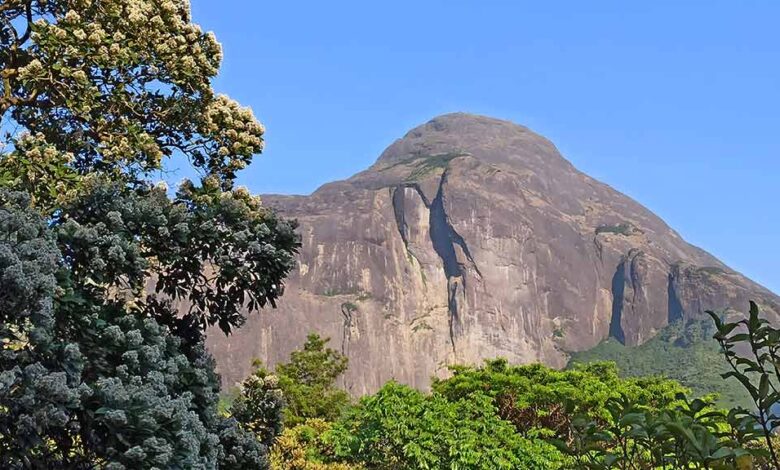
At the heart of the Kalakad Mundanthurai Tiger Reserve, sharing a border with Kerala’s protected areas, is a distinctive mountain that is associated with myth as much as it is with the tremendous biodiversity of its slopes.
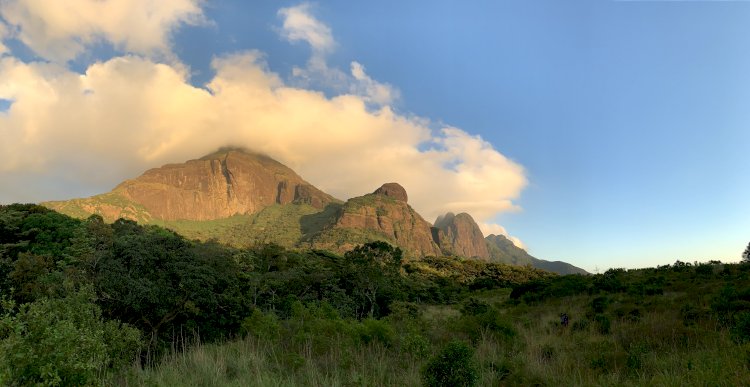
Agasthyamalai or Pothigai (as it is known in Tamil), is no ordinary mountain. Amongst the steep slopes of scrub forest, valleys of dense tropical rain forest, and jagged peaks, Agasthyamalai stands as a sentinel. Agasthyamalai has a distinct conical profile that is nearly identical from both eastern and western sides.
From either Trivandrum in the west or Tirunelveli in the east it stands out as a distinguished peak amongst a range of sharp, craggy mountains. Relatively speaking it is a lesser peak in the chain of mountains that make up the 1,400 km long Western Ghats.
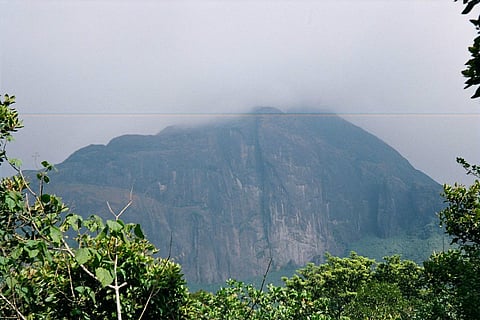
Dodabetta in the Nilgiris (2,623 m), Karnataka’s Mullayanagiri (1,918 m) and Anai-Mudi (2,694 m), South India’s highest peak are all far higher. Yet, there is something about Agasthyamalai that transcends mere height (1,868 m) and size. Agasthyamalai’s profile bears an uncanny resemblance to Tibet’s Mt. Kailash and this has perhaps lead to its aura and many myths. Agasthyamalai’s namesake is derived from the great sage who is said to have given the Tamil language to India’s Dravidian people many years ago.
Agasthya is associated with herbal remedies and is often depicted holding a stone crusher in one hand and a vessel in the other. The significance of this and the fact that Agasthyamalai hills are known for their medicinal plants should not be overlooked. The most pertinent myth regarding the mountain relates to Agasthya and the marriage of Lord Ishwara (Siva) and Parvathi in the heavenly realm of Mt. Kailash (the sacred peak in Tibet at 6,740 m).
When the wedding was announced, all the world’s gods, rishis and people migrated north to the Himalaya. As a result, the earth went dangerously off balance. With disaster looming, Ishwara asked Agasthya to go south and balance the situation through meditation. After meditating and praying on the mountain that now bears his namesake the world was once again put in balance.