Uttar Pradesh emphasised to prevent water-borne diseases in rural areas through community driven participation
lucknow ( Raghwendra Pratap Singh) : Uttar Pradesh government on Friday (May 29, 2026) said in an attempt to effectively prevent water-borne diseases in rural areas and to maintain a robust system for quality assurance and monitoring, it has prioritised water quality testing through community-driven approach.
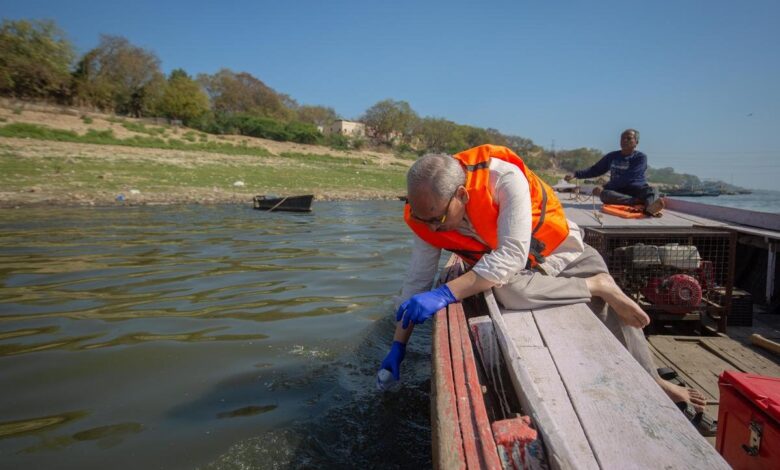
Under the initiative, which pushes for community-level participation, women have been trained to test water quality using Field Testing Kits (FTKs) for early & effective detection of water contamination and strengthen local community ownership of rural water quality monitoring.
Under the Jal Jeevan Mission, a robust system for quality assurance and monitoring has been implemented to ensure safe drinking water in rural areas,” Anurag Srivastava, Additional Chief Secretary of the Namami Gange and Rural Water Supply Department, told this in Lucknow.
To promote community-level participation, women have been trained to test water quality using Field Testing Kits (FTKs) for early & effective detection of water contamination and strengthen local ownership of rural water quality monitoring. Under this, the Field Testing Kit (FTK) campaign under the Jal Jeevan Mission has evolved into a significant platform for women’s empowerment and self-sufficiency.
By linking specialised groups of women across over 97,000 villages in the state to this initiative, the government is not only guaranteeing a clean and quality supply of drinking water in rural areas but is also enhancing the technical skills of women,” Mr. Srivastava said.
As part of this mission, groups of five women each have been equipped with Field Testing Kits in nearly all Gram Panchayats and revenue villages throughout the state. Currently, trained women are actively engaged in water quality testing. These women routinely test water samples from drinking water sources and household taps in their respective regions.
Mr. Srivastava, a 1992-batch Indian Administrative Service (IAS) officer, added that the honorarium earned for testing water purity in villages has also created new opportunities for additional income and self-employment for rural women.