More Accurate Weather Forecasting in UP; CM Yogi Issues Directives
Lucknow (Raghwendra Pratap Singh) :
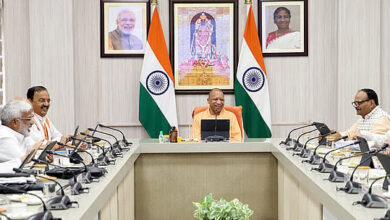
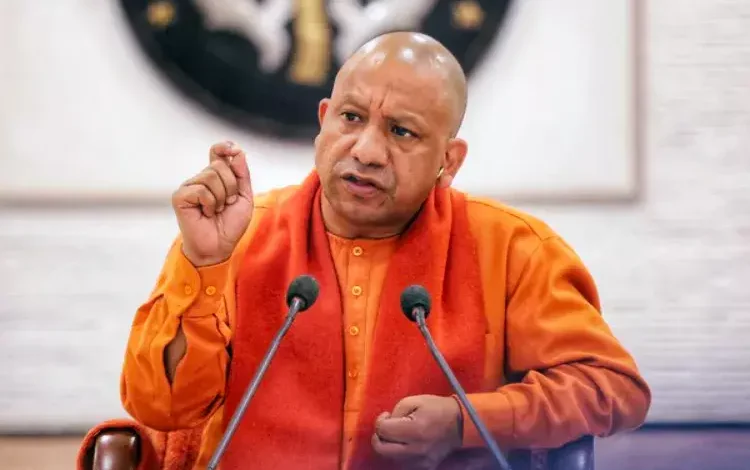
Chief Minister Yogi Adityanath has directed authorities to make the state’s weather early warning system more accurate, rapid, and citizen-centric. During a review meeting of the Relief and Disaster Management Department on Saturday, the Chief Minister stated that timely and accurate information during natural disasters can save countless lives. Therefore, the weather forecasting and warning system must not be confined to just a technical setup but must be effectively extended to the last mile.
He instructed officials to strengthen “last-mile connectivity” in villages and sensitive areas, utilizing IVRS, panchayat-level loudspeakers, local FM radio, mobile alerts, and social media extensively.
Review of the May 13 Storm
During the meeting, a review of the severe thunderstorm that struck on May 13, 2026, was presented. It was reported that IMD’s Multi-Hazard Early Warning System (MHEWS) had been monitoring the event seven days in advance. Initially, a ‘Yellow Warning’ was issued, which was later upgraded to an ‘Orange Warning’ and a ‘Red Alert’ for several districts. The warnings predicted severe thunderstorms, lightning, hailstorms, and winds exceeding 60 km/h. In several locations, wind speeds between 80 to 130 km/h were recorded.
The meeting highlighted that Nowcast alerts predicting wind speeds of 70 to 80 km/h were issued for several districts, including Bhadohi, Prayagraj, Fatehpur, Lucknow, Mirzapur, Raebareli, Kanpur Nagar, and Unnao. Color-coded alerts were transmitted to district administrations, DDMAs, Aapda Mitras (disaster management volunteers), and relevant departments through the “Sachet” platform. SMS-based alerts were also sent to active mobile phones in the affected areas. Continuous SMS alerts were rolled out throughout the event.
Information was also widely disseminated through local TV channels, FM radio, WhatsApp groups, village heads (Gram Pradhans), Lekhpals (revenue officials), as well as Asha and Anganwadi workers. The Chief Minister took a detailed report of the actions taken by the respective District Magistrates after receiving the weather alerts.
Focus on Public Awareness and Safety
The Chief Minister emphasized that alongside issuing warnings, it is equally important to raise public awareness regarding safe practices. He directed the launch of massive public awareness campaigns in schools, panchayats, and rural areas. Additionally, he instructed officials to assess the vulnerability of trees, electric poles, hoardings, and weak temporary structures at the local level and prepare standard operating procedures (SOPs).
Advanced Technical Infrastructure
It was shared in the meeting that the IMD is continuously monitoring the state’s weather using Doppler Weather Radars, Automatic Weather Stations (AWS), Automatic Rain Gauge Stations (ARG), lightning sensors, satellite imagery, and Numerical Weather Prediction models. Forecasts for thunderstorms and lightning activities are issued at the Medium-Range (4–5 days), Short-Range (2–3 days), and Nowcast (up to 3 hours) levels.
Currently, 450 Automatic Weather Stations and 2,000 Automatic Rain Gauges have been installed across the state. Doppler Weather Radars are being set up in Aligarh, Jhansi, Lucknow, Varanasi, and Azamgarh, while the process to install additional radars in Bareilly, Deoria, and Prayagraj is underway. The installation of Wind Profiler Radars in Lucknow and Prayagraj is also in progress.
Strategic Planning and Community Engagement :
The meeting concluded with reports that Disaster Management Plans are being prepared in collaboration with the UNDP for 15 state departments, all 75 districts, and 20 major cities. In 2025, women from around 1,800 Self-Help Groups across 118 tehsils in 44 districts were trained, leading to public awareness campaigns across 2,361 villages and 4,824 hamlets (majras). Furthermore, insurance certificates have been distributed to Aapda Mitra volunteers, and 66,077 life jackets have been provided across 38 districts to prevent boat accidents.