
Red alert issued as heatwave sweeps Uttar Pradesh
Heat waves in Uttar Pradesh disrupts common lives
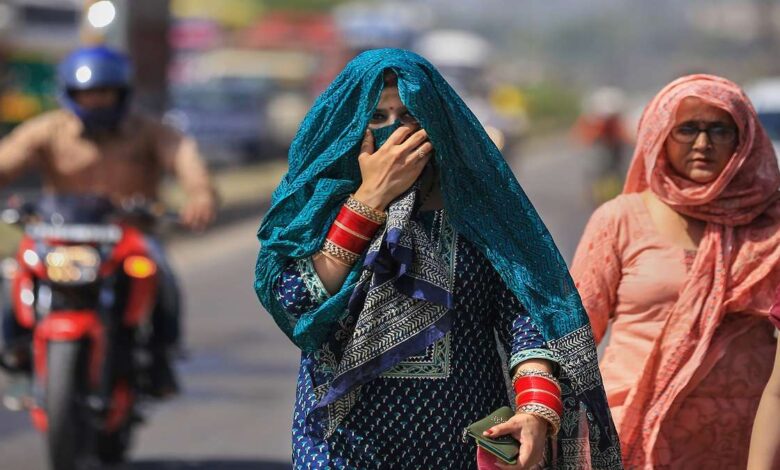
Lucknow ( Vivek Ojha ) : The Meteorological Centre here has issued a red alert for 10 districts in the State for Friday (May 22, 2026), warning of “severe” to “very severe” heatwave conditions. The alert has been issued for Banda, Chitrakoot, Kaushambi, Prayagraj, Fatehpur, Pratapgarh, Mirzapur, Varanasi, Bhadohi and Jaunpur districts, where severe heatwave conditions are likely during the day.

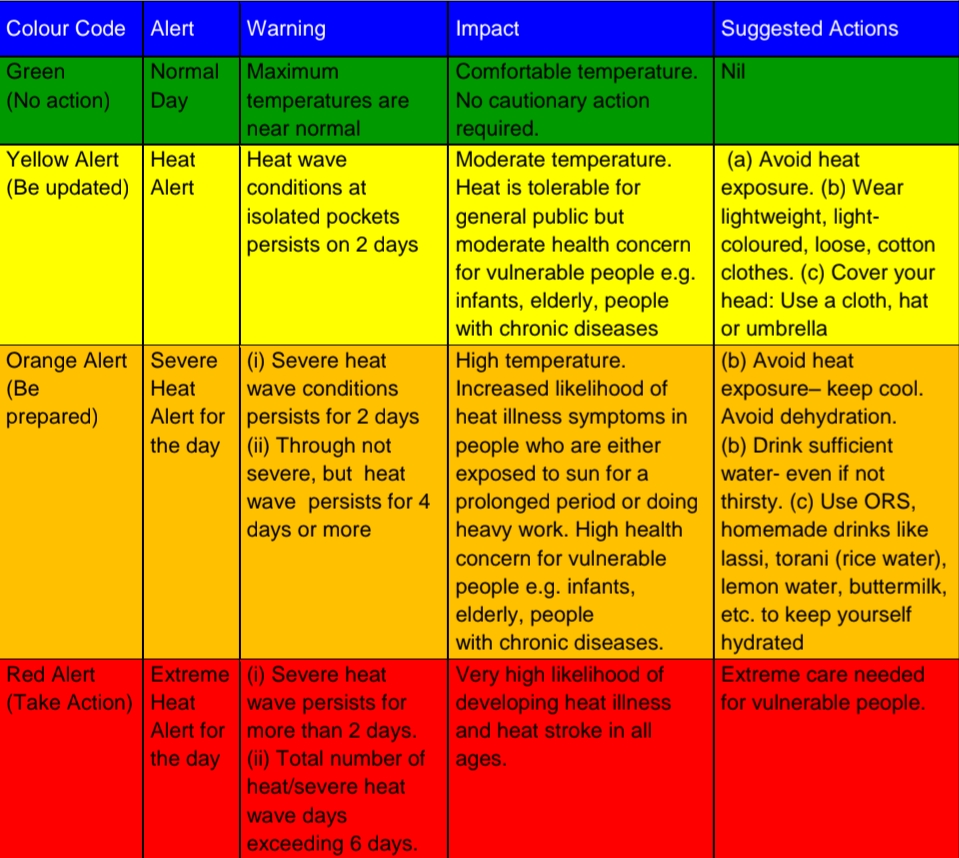
What is A heat wave red alert :
A heat wave Red alert is the highest level of weather warning, signifying extreme and prolonged heat conditions that pose a severe threat to public health. It is typically triggered when temperatures persistently soar well above normal (often or higher) for multiple consecutive days, or when high humidity amplifies the perceived heat. It mandates immediate protective action as life-threatening situations, such as widespread heat stroke and heat exhaustion, become highly likely for all age groups.

What is a heat wave ?
Heat Waves are a period of unusually high temperatures as compared to what is normally expected over a region. Therefore, the temperatures at which Heat waves are declared differ from place to place based on the temperature climatology (historical temperatures) of that region. The impact of heat waves gets aggravated by supportive meteorological factors such as high humidity, high wind speed, duration of heat wave events, etc. India Meteorological Department provides color-coded Heat Wave warning information through its daily bulletins as well as through a GIS-based visualization platform for the next 5 days.
Heat wave is considered if maximum temperature of a station reaches at least 400C or more for Plains and at least 300C or more for Hilly regions.
How India Meteorological Department (IMD) monitors the Heatwave? :
IMD has a big network of surface observatories covering the entire country to measure various metrological parameters like Temperature, Relative humidity, pressure, wind speed & direction etc. Based on daily maximum temperature station data, climatology of maximum temperature is prepared for the period 1991-2020 to find out normal maximum temperature of the day for a particular station. Thereafter, IMD declared heat waves over the region as per its definition.
How IMD predicts the Heat wave? :
IMD predicts heat wave based on synoptic analysis of various meteorological parameters and from the consensus guidance from various regional & global numerical prediction models like WRF, GFS, GEFS, NCUM, UMEPS,UM Regional etc. run in Ministry of Earth Sciences (MoES) and other international models available under bilateral multi-institutional arrangement.
The objective consensus is derived from the models utilising MME concepts which is further bias corrected by comparing it with initial observations. Thereafter, a subjective consensus is developed among forecasters through the exchange of knowledge, experience and expertise in video conferencing on daily basis to modulate above objective consensus forecast by taking into considerations regional and local variations and other features. By this way operational forecast is prepared by IMD.