India pays tribute to great tamil politician M karunanidhi on his birth anniversary today
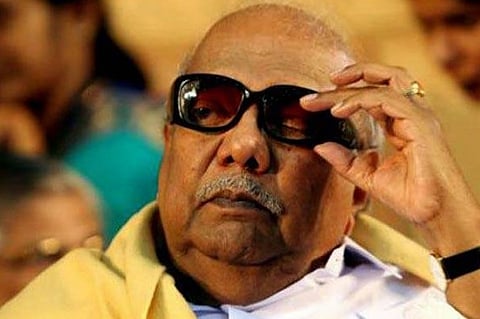
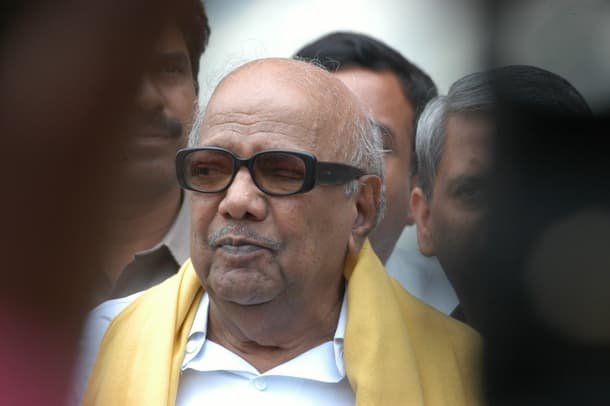
New Delhi ( Vivek Ojha) Muthuvel Karunanidhi is an Indian politician and the head of the Dravida Munnetra Kazhagam (DMK). M. Karunanidhi was the foundational architect of modern Tamil Nadu, dominating its politics for over seven decades as the president of the DMK and serving as Chief Minister five times. His political, social, and economic impact fundamentally transformed the state’s trajectory. He championed caste-based reservations, instituting quotas that elevated backward classes, Most Backward Classes (MBCs), Scheduled Castes/Tribes, and even created internal sub-quotas for the most marginalized like the Arunthathiyars. He amended the Land Reforms Act in 1970 to reduce the land ceiling, distributing surplus acreage to landless farmers.
Birth and Early life:
Muthuvel Karunanidhi, was born on 3 June 1924 in the village of Thirukkuvalai, located in Nagapattinam district of Madras Presidency. His parents, Ayyadurai Muthuvel and Anjugam, had two elder daughters named Periyanayaki and Shanmugasundari. M. Karunanidhi’s education began at a local school, where his father also wanted him to learn music. However, the music lessons were conducted in temples by teachers from the Isai Vellalar group who enforced discriminatory practices, such as forbidding Karunanidhi from covering his upper body, wearing slippers, or wearing a cotton cloth around his hips.
Displeased with the lack of respect he received, Karunanidhi’s father decided to end his music lessons. Instead, he arranged for Karunanidhi to receive special tutoring, for which he paid a tuition fee of milk every morning and evening to the local headmaster.
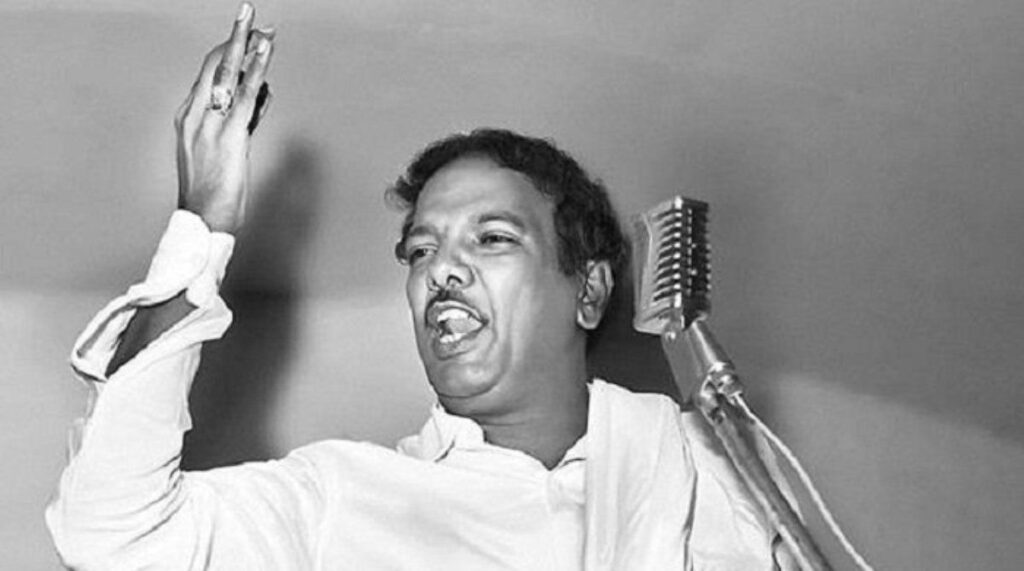
According to M. Karunanidhi, his early experiences with music lessons taught him about the oppression of individuals based on their caste. He observed how certain people derived pleasure from humiliating others and how others carried out customs without realizing the harm they caused to a large majority of the population. These lessons laid the foundation for his political beliefs and activism.
At the age of 12, Karunanidhi left his village to pursue his high school education in Thiruvarur. It was during this time that he became involved in organizing school students for the Anti-Hindi agitations. The death of two anti-Hindi agitators at the hands of the police deeply affected him, and he began to write about these events in his first Tamil historical novel titled Selvachandira. By the age of 13, Karunanidhi had already demonstrated his commitment to social justice and political change, setting the stage for his later contributions to Indian politics and literature.
Early Political Activism :
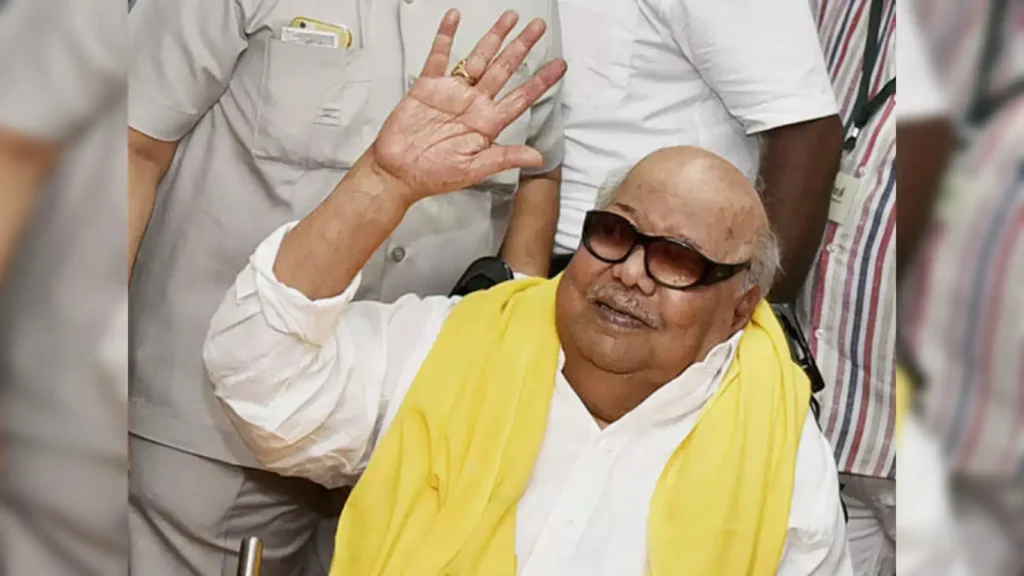
M. Karunanidhi’s entry into politics began at the young age of 14, after hearing a stirring speech by Alagirisamy of the Justice Party. He was inspired by the writings and ideas of prominent Tamil leaders like Panagal Arasar, Periyar, and Pattukottai Azhagirisamy, whom he looked up to as role models. In particular, his participation in the Anti-Hindi agitations sparked a passion for political activism in him, leading him to organize demonstrations with a group of boys traveling around Tiruvarur on a cycle rickshaw in 1938. These protests were aimed at opposing the provincial government’s legislation making Hindi education mandatory in schools, which was eventually repealed in 1939. Karunanidhi’s taste for activism continued to grow, and after a brief stint with Communism, he found himself drawn to the ideas and speeches of leaders from the Justice Party, Self-Respect Movement, and Dravidar Kazhagam.
He became an ardent follower of Periyar’s movement, which sought to eradicate caste discrimination and promote social justice in Tamil Nadu. Karunanidhi’s commitment to the cause was reinforced by an incident that he witnessed as a young boy. He saw his father hurriedly rising and tying his towel to his waist from his head as a gesture of servitude when an upper-caste landlord passed by. This incident left a deep impression on Karunanidhi, and he resolved to fight against the caste-based oppression and discrimination that he witnessed around him.
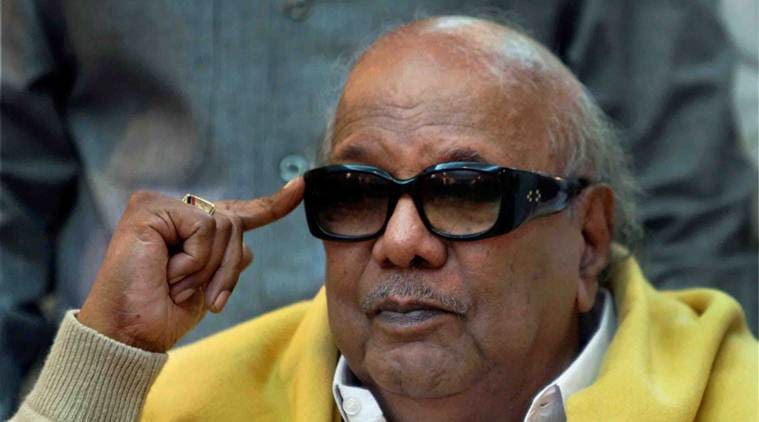
At the young age of fifteen, M. Karunanidhi embarked on his own publishing journey, creating a magazine called Maanavanesan, which roughly translates to “Friends of Students”. Along with his friends, he would produce fifty copies of the magazine and distribute them. Some copies were even sent to leaders of the Self-Respect Movement. One day, a political activist approached him and asked him to lead the Forum for Peace, Liberty, Equality and Justice. Karunanidhi agreed and became its elected secretary. However, he eventually dissolved the forum when he discovered an attempt to turn it into a front for the Congress party. He then refunded the subscription money to those who had paid, though many refused to accept it.
With the remaining funds of seventy-five rupees, he founded the Tamil Nadu Tamil Students Association in 1941. A year later, the association held its annual function, which was attended by several notable individuals, including Bharathidasan, K.A. Anbazhagan, K.A. Mathiazhagan, and student leaders from Annamalai University. However, Karunanidhi faced a significant hurdle in funding the travel and expenses of his invitees and guest speakers. In a daring move, he pawned a gold necklace that his mother had made for him but which he rarely wore, and used the proceeds of 50 rupees to cover the costs.
At the age of 33, M. Karunanidhi entered the Tamil Nadu assembly by winning the Kulithalai seat in Tiruchirapalli during the 1957 election, alongside 14 other successful DMK candidates. He continued his impressive political career by managing the party’s campaigns during the 1959 Madras Municipal Corporation elections, resulting in 45 victorious seats out of the 90 contested. As a result of his leadership, Karunanidhi was elected as the DMK treasurer on September 25, 1960. M. Karunanidhi went on to secure a second victory in the state assembly on February 21, 1962, this time representing the Thanjavur constituency, where he defeated Congress candidate A.Y.S. Parisutha Nadar. In that same year, he was appointed as the deputy leader of the opposition in the state assembly. Recognizing the importance of engaging with his party members, Karunanidhi began sending daily letters to them, which he referred to as “udanpirappukal” or “blood brothers.” This practice continued for over fifty years and exemplified his dedication to building strong connections within his party. Karunanidhi’s outstanding political acumen and his ability to forge meaningful relationships played a significant role in shaping his long and successful political career.
In February 1967, C.N. Annadurai, the leader of the DMK, named Karunanidhi as the party’s candidate for the Madras Legislative Assembly election, during the State-level meeting held at Virugambakkam, Chennai. Karunanidhi, serving as the DMK treasurer, successfully raised 11 lakh rupees to fund the party’s election campaign. This proved to be a pivotal moment for the DMK, as they secured an absolute majority in the election, with Annadurai taking office as Chief Minister. Following his election to the Saidapet Assembly constituency in Chennai in March 1967, Karunanidhi was appointed as the Minister of the Tamil Nadu Public Works Department, thanks to his impressive record and contributions to the party. Under Arignar Annadurai’s administration, Madras State was rechristened as Tamil Nadu on 14 January 1969.
At that time, Karunanidhi was in charge of five ministries, including Transportation, Public Works, Highways, Ports, and Minor Irrigation. His position allowed him to make significant contributions toward the development of Tamil Nadu’s infrastructure and solidified his reputation as an efficient and dedicated minister.
Contribution to Tamil literature and cinema:
Karunanidhi, despite his apparent interest in politics, wore many caps throughout his life. He is the proud author of a number of books, some of which are: Romapuri Pandian, Thirukkural Urai, Thanpandi Singam, Vellikizhamai and Ponnar Shankar, among others. Raajakumari, Abimanyu, Parasakhti and Manohara, on the other hand are some of his most acclaimed screenplays. He even wrote the song, ‘Semmozhiyaam Tamizh Mozhiyaam’, for the World Classical Tamil Conference 2010, to which AR Rahman gave music.